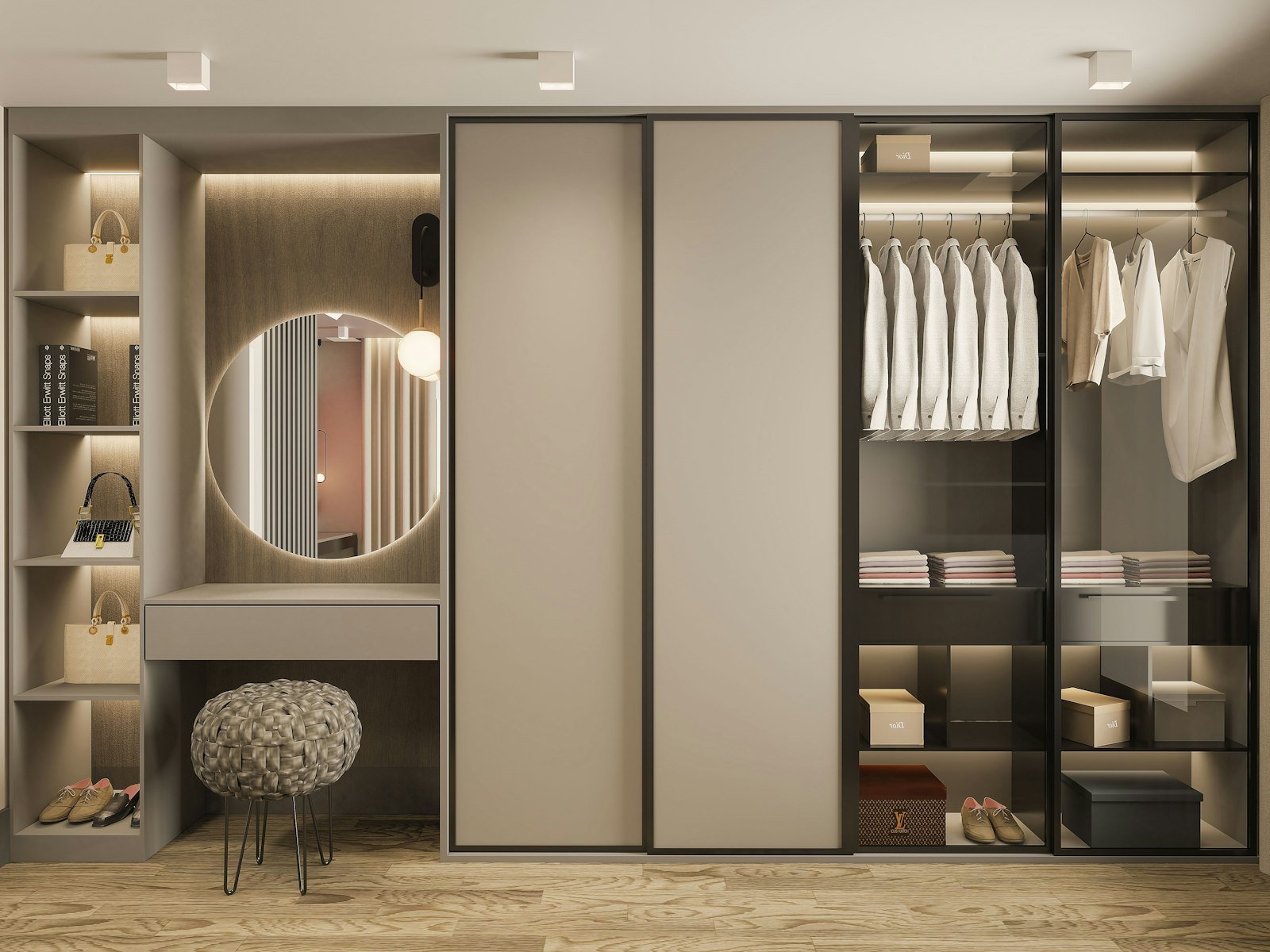
Choosing a wardrobe door type feels like a small decision until you actually live with it every day. The two most common options, sliding and hinged, each solve a different problem, and picking the wrong one for your room can leave you squeezing past furniture every morning. Here’s what genuinely separates them.
How Each One Works
A sliding wardrobe has doors that move sideways along a track, one panel gliding past another. Because the door doesn’t swing outward, it needs no floor clearance in front of the wardrobe at all.
A hinged wardrobe uses traditional doors attached with hinges on one side, swinging open like a regular cupboard or room door. This gives you full, unobstructed access to everything inside at once, but it requires open floor space in front for the doors to swing.
Space Requirements
This is the single biggest factor in choosing between the two. A sliding wardrobe is the clear winner in a smaller bedroom, or any room where furniture, a bed, or a walking path sits close to the wardrobe. Since the doors never swing outward, you can place a bed or a chair right up against the wardrobe front without any clearance issue.
A hinged wardrobe needs genuine floor space to open properly, typically at least the width of the door itself, plus a bit more for comfortable access. In a compact bedroom, this can mean the wardrobe effectively “borrows” floor space you might have wanted to use for something else.
Access and Visibility
Hinged doors give you a real advantage here. When both doors are open, you can see and reach everything inside at once, top to bottom, side to side. This makes it genuinely easier to find things quickly, especially in a wardrobe with a lot of hanging clothes.
Sliding doors only let you access one section at a time, since one panel always covers part of the wardrobe while the other is open. For a simple wardrobe with just a couple of sections, this is barely noticeable, but for a large, multi-section wardrobe, it can mean sliding a door back and forth more than once to find what you need.
Cost
Hinged wardrobes are generally the more affordable option. The hardware involved, simple hinges, is inexpensive and has been standard for a very long time. Manufacturing and installation are also comparatively straightforward.
Sliding wardrobes typically cost more, mainly because of the sliding track mechanism, rollers, and the more precise fitting required to keep panels running smoothly without jamming or derailing. Good quality sliding hardware isn’t cheap, and it’s not somewhere worth cutting corners, since a poor mechanism becomes a daily annoyance.
Maintenance and Longevity
Hinged wardrobes are mechanically simple, which generally means fewer things to go wrong over time. Occasionally tightening a hinge screw is about the extent of the upkeep required.
Sliding wardrobes have more moving parts, so the track and rollers need to stay clean and free of dust buildup to keep the doors gliding smoothly. With good quality hardware, this isn’t a major issue, but cheaper sliding systems can start sticking or making noise within a couple of years.
Look and Style
Sliding wardrobes tend to give a sleeker, more contemporary look, particularly when finished with a mirror or a large uninterrupted panel. This clean, flat front also makes a small room feel a bit more spacious, since there’s no door swinging into view.
Hinged wardrobes can look either classic or modern depending on the finish, and they allow more design flexibility with panel styling, mouldings, or a mix of finishes across individual doors, since each door section is independent rather than part of one sliding system.
Which One Suits Your Room
For Rohini-specific wardrobe types, materials, storage ideas and local cost guidance, see our wardrobe design guide for Rohini homes.
If your bedroom is on the smaller side, or the wardrobe sits close to a bed or walking path, sliding doors are usually the more practical choice, even with the higher price tag. The space you save is often worth more than the cost difference.
If you have a larger room with clearance to spare, and you’d rather have full, instant access to everything inside along with a lower price, hinged doors remain an excellent, reliable option that has worked well in bedrooms for generations.
Our Honest Take
Neither option is universally better. Sliding wardrobes solve a real space problem and look sleek doing it, but they cost more and need decent hardware to stay smooth over the years. Hinged wardrobes are simpler, more affordable, and give you full access at once, but only if your room actually has the floor space to let the doors open freely.
Planning a new wardrobe?
Get a free home visit and a clear quote — no obligation.
A few questions people often ask: how much floor clearance does a hinged wardrobe actually need? As a general rule, allow at least the same width as the door panel itself in front of the wardrobe, so the door can swing fully open without hitting furniture. Do sliding wardrobe doors break down often? With good quality tracks and rollers, they’re quite reliable for many years, but cheaper hardware can start sticking or derailing within two to three years, so it’s worth investing in decent hardware upfront. And can a wardrobe be built with both sliding and hinged sections? Yes, this is a fairly common approach, using sliding doors for the main section against a tight wall and a small hinged section elsewhere in the room where there’s enough clearance.