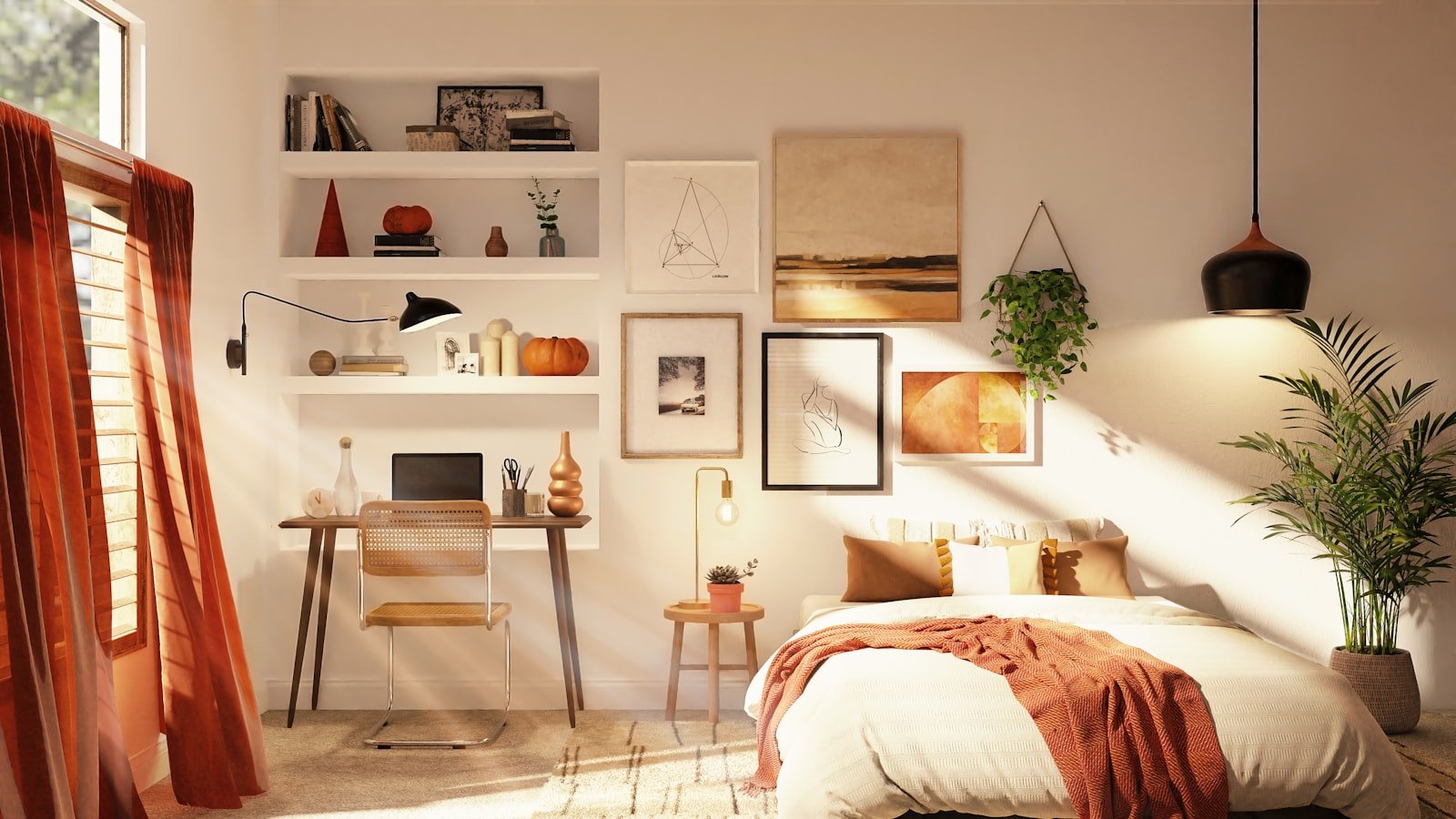
A proper home office corner has become a real, practical need in a lot of Delhi NCR homes. In plenty of 1BHK and 2BHK flats here, setting aside an entire room just for work simply isn’t possible. Working off a laptop at the dining table, then clearing the whole thing away before dinner — this is still daily reality for a lot of people. Do that every day for long enough, and it gets tiring fast, with no real separation between work and personal space.
The good news is you don’t need a full room to build a genuinely functional home office. A small, well-planned section of a bedroom, living room, or even an unused stretch of wall can become a proper home office corner. With the right desk, vertical storage, good lighting, and comfortable seating, even 2.5 to 3 feet of space can handle daily work comfortably.
This guide covers space-saving desk options, storage, lighting, ergonomics, budget, and the common mistakes worth avoiding.
Why This Has Become So Necessary
In cities like Delhi, Noida, Gurugram, and Ghaziabad, available space in 1BHK and 2BHK flats is already limited. A separate study room or home office isn’t realistic for most families here. As work-from-home, hybrid schedules, and regular online classes for kids have become the norm, having a dedicated corner has stopped being a luxury and started being a genuine need.
The biggest problem with turning the dining table into a daily office desk is that it’s needed for other things too — eating, kids’ homework, or just piling up laptops and documents in between. A fixed home office corner clears up that daily back-and-forth entirely.
Space-Saving Desk Options
A wall-mounted floating desk doesn’t touch the floor, keeping the space underneath free for storage or just easier movement. It fits into almost any spare corner of a bedroom or living room, needing only about 2–2.5 feet of width — a genuinely practical option for smaller flats. A foldable or drop-down desk folds flat against the wall when not in use, useful for small studio flats where every square foot counts — just make sure it’s sturdy enough if you’re planning to use it daily for 6–8 hours. A corner desk unit works well for an awkward corner that regular furniture never quite fits into — an L-shape or angled desk can turn what was dead space into a proper work area. And extending an existing wardrobe or storage unit with a small pull-out or fixed desk section is another option, which avoids buying separate furniture altogether and keeps the whole setup visually integrated.
When choosing a desk, don’t focus on width alone — it needs enough depth too, for a laptop plus a notebook, mouse, and other essentials. A desk that’s too shallow gets cluttered fast, no matter how wide it is.
Lighting and Ergonomics
Lighting is worth thinking about right from the start, before deciding where the corner goes. If the corner is near a window, make the most of natural light — just position the desk so there’s no glare on the screen. Where natural light is limited, a good task lamp with an adjustable arm makes a real difference. The room’s main ceiling light is rarely enough on its own for focused work. During summer, keep an eye on direct sunlight and heat too if the desk is right next to a window.
Ergonomics matter more than people expect, especially if this corner gets used for several hours a day. Chair height should let your arms sit at roughly a 90-degree angle while typing, with the screen’s top edge at or just slightly below eye level, and there should be enough legroom underneath if space allows. A good home office corner isn’t just about how it looks — comfort and posture during daily work matter just as much.
Storage and Organisation
Clutter becomes a much bigger issue in a small home office corner than in a full room. Leaning on vertical storage instead of piling more furniture onto the floor is usually the more practical route.
Wall-mounted shelves above the desk work well for files, books, chargers, and small accessories, without eating into the actual working surface. A pegboard or magnetic panel is a neat way to organise stationery and small tools on the wall, keeping the desk surface clear. An under-desk drawer unit, if there’s room, gives you a slim rolling drawer for stationery, documents, and other small items. And cable management clips or trays keep wires from turning into a tangled mess — planning out the laptop charger, monitor, and extension board cables in advance makes a real difference.
A Few Practical Do’s and Don’ts
Worth deciding your minimum practical working surface before anything else, rather than making the desk so small that only the laptop fits and there’s no room for notes or books. Add a task lamp or other focused lighting rather than relying only on the room’s main ceiling light. Check the chair’s height and comfort in advance — any old chair lying around can turn uncomfortable fast over long sitting hours. Plan the power socket, cable routing, and chair movement before any furniture gets built, rather than placing an order first and figuring it out later. If the desk is in a bedroom, keep it a bit of distance from the bed. Don’t over-add storage — too many cabinets in a small corner make it feel cramped rather than organised. And for a small corner, a light finish like white or light oak tends to work better than dark, heavy wood, which can make the space feel more closed in.
What It Costs
Cost for a small home office corner varies depending on the desk type, material, finish, hardware, and how much customisation is involved. In Delhi NCR, options range from a basic setup to fully customised furniture. As a rough guide: a simple wall-mounted floating desk runs ₹4,000–9,000, a foldable or drop-down desk costs ₹5,000–12,000, a custom corner unit with shelving runs ₹15,000–30,000, and a desk integrated into a wardrobe design adds roughly ₹8,000–15,000 on top of the base wardrobe cost.
Material grade, finish choice (laminate versus veneer), hardware quality, and the level of customisation all shift these numbers up or down. Quotes can also vary between a local carpenter, a modular furniture provider, and a customised interior setup — getting an exact quote needs a site visit with measurements and material specifications.
A few things people often ask: is a bedroom study corner a good idea? Yes, if a fully separate room isn’t available, a bedroom is a genuinely practical option — just keep the desk a bit separate from the bed, and add a divider or rug to define the zone if possible, so work and sleep stay mentally separate. How much space is genuinely needed for this to work? A functional corner can work in as little as 2.5 to 3 feet of width, as long as the desk is wall-mounted and storage goes vertical rather than sideways — a full dedicated wall isn’t necessary, though it’s worth thinking about desk depth and chair movement for daily use. Which design suits a 1BHK flat best? A wall-mounted floating desk, a foldable drop-down desk, or a wardrobe-integrated desk are all practical options — the right one depends on available wall space, daily usage, and storage needs. If you’re working from this corner daily for long hours, a fixed, stable desk is worth prioritising over a foldable one. How do you keep a small corner clutter-free? Keep only daily-use items on the desk itself, and move everything else — books, files, stationery — to vertical shelves or drawers. Cable management clips and a dedicated charging point also help a lot. Giving every item a fixed spot is what keeps a small corner organised over the long run.
Ready to build your home office corner?
Get a free consultation and space-saving design ideas for your home.