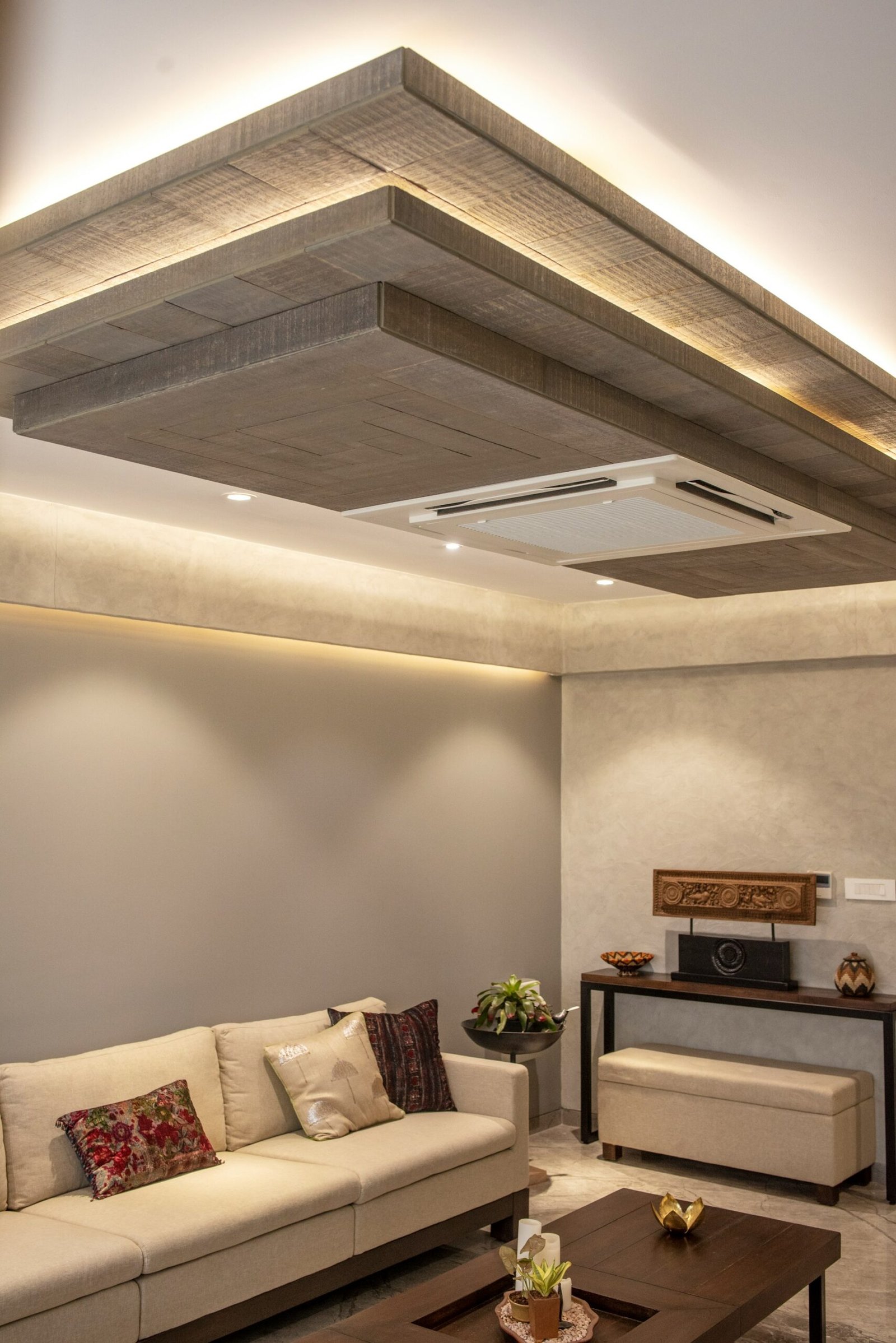
If you’ve started planning a false ceiling, you’ve probably already run into these two names being compared everywhere. Gypsum and POP are the two most common materials used for false ceilings worldwide, and while they can look fairly similar once painted, the process, cost, and long-term experience of living with each one are genuinely different.
What Each Material Actually Is
Gypsum ceilings are built from pre-manufactured boards, made from gypsum plaster sandwiched between two layers of paper, similar to drywall. These boards are cut to size and fixed onto a metal frame that’s suspended below the original ceiling.
POP, short for Plaster of Paris, is a wet material mixed on site and applied directly by hand over a wire mesh framework. Instead of installing pre-made boards, a skilled worker essentially sculpts the ceiling shape in place, layer by layer, letting each layer dry before adding the next.
Installation Process and Time
Gypsum installation is noticeably faster and cleaner. Since the boards arrive ready-made, the work mostly involves building the metal frame and screwing the boards into place, then finishing the joints. A typical room can often be completed within a few days, with relatively little mess or dust compared to wet plastering.
POP takes considerably longer, since each layer needs proper drying time before the next can be applied, and the whole process depends on humidity and weather conditions. It’s also a messier job, involving wet plaster, water, and more on-site cleanup. For a design with intricate mouldings or curves, though, POP genuinely allows for details that are difficult to achieve with flat gypsum boards.
Design Flexibility
This is where POP has a real advantage. Because it’s shaped by hand while wet, POP can create elaborate cornices, curved edges, and decorative mouldings that would be very difficult to replicate with pre-cut gypsum boards. If you want an ornate, traditional ceiling design with detailed borders, POP is generally the better tool for the job.
Gypsum is more suited to clean, geometric designs, such as stepped or tray ceilings, cove lighting channels, and simple modern patterns. Manufacturers do make some pre-formed decorative gypsum cornices, but they don’t match the level of custom detail a skilled POP craftsman can achieve by hand.
Durability and Maintenance
Gypsum tends to hold up well over time in normal, dry indoor conditions, and it’s genuinely easier to repair if damaged. Since it’s built from separate boards, a damaged section can sometimes be cut out and replaced without redoing the entire ceiling.
POP can develop hairline cracks over time as the plaster settles or as the building experiences minor movement, and these cracks are a fairly common maintenance issue in POP ceilings after several years. Repairing POP typically means reapplying plaster to the damaged area and repainting, which is a more involved fix than swapping a gypsum panel.
Both materials are vulnerable to water damage if there’s a leak from above, so neither is a good choice directly beneath a bathroom or any area with plumbing risk, without proper waterproofing measures first.
Cost Comparison
For a broader look at false ceiling designs, materials and Delhi NCR pricing, see our false ceiling design and cost guide.
Gypsum installation, thanks to its faster process and factory-made boards, is often more cost-effective for straightforward designs, especially at scale across multiple rooms. Simple, clean-line gypsum ceilings tend to be one of the more budget-friendly false ceiling options available.
POP can actually work out cheaper for very simple designs, since the raw material itself is inexpensive, but the labour cost rises quickly as the design gets more decorative and time-consuming. For elaborate, detailed mouldings, POP often ends up costing more overall once labour hours are factored in.
Which One Suits Your Home
If you want a clean, modern look with features like cove lighting or a stepped ceiling, and you’d prefer a faster, less messy installation, gypsum is generally the more practical choice for most homes today.
If you’re after an ornate, traditional ceiling design with detailed mouldings and curves, and you’re working with a skilled plasterer who can execute the design well, POP remains the better material for achieving that specific decorative look.
Our Honest Take
For the vast majority of modern homes, gypsum has become the more popular and practical choice, largely because of its speed, cleaner installation, and easier long-term repairs. POP still holds its place for genuinely decorative work where hand-crafted detail matters more than installation speed or long-term crack resistance.
Planning a false ceiling for your home?
Get a free consultation and design ideas — no obligation.
A few questions people often ask: does gypsum ceiling get damaged by moisture? Standard gypsum board isn’t fully waterproof, so it’s best avoided in bathrooms or very humid areas unless a specific moisture-resistant gypsum board is used. Why do POP ceilings crack over time? Small hairline cracks usually happen as the plaster continues to cure and settle, or from minor building movement, and while common, they’re generally a cosmetic issue rather than a structural one. And can gypsum and POP be combined in the same ceiling? Yes, this is actually a fairly common approach, using gypsum for the main flat sections and cove lighting channels, with POP reserved for a decorative border or feature detail where hand-shaping adds real value.